Nationwide Legionella Risk Assessments
Protect your staff, tenants, and visitors from a preventable hazard. We provide comprehensive, fully compliant ACoP L8 water hygiene risk assessments with rapid dispatch across the UK.
- Nationwide Service: Highly qualified local assessors across the UK.
- HSE Compliant: Strict adherence to ACoP L8 & HSG274 standards.
- Complete Independence: We assess your risk; we don't sell plumbing repairs.
- Multi-Service Discount: Combine seamlessly with your Fire Risk Assessment.
Get a Priority Quote
Enter your details for an immediate, no-obligation cost.
Request Received
Our coordination team is reviewing your requirements and will contact you shortly to confirm your assessment.
The Legal Requirement for Legionella Compliance
Legionella is a naturally occurring bacterium that can rapidly proliferate in purpose-built water systems—including standard office kitchens, school shower blocks, and residential hot water tanks. When contaminated water is aerosolized (turned into a fine spray or mist) and inhaled, it can cause Legionnaires' disease, a severe and potentially fatal form of pneumonia.
Because the risk to public health is so severe, water hygiene is strictly regulated in the UK. If you are an employer, a landlord, or someone in control of premises, you are legally designated as the Duty Holder.
Your Statutory Duties
Under the Health and Safety at Work etc Act 1974 and the Control of Substances Hazardous to Health Regulations 2002 (COSHH), Duty Holders must take suitable precautions to prevent or control the risk of exposure to Legionella. The specific steps you must take are laid out in the HSE’s Approved Code of Practice (ACoP L8).
The Consequences of Non-Compliance
Failing to carry out a Legionella Risk Assessment is a direct breach of health and safety law. The HSE and local authorities actively prosecute organizations for failing to assess risk, even if an outbreak hasn't occurred. Penalties can include unlimited corporate fines, enforcement notices, and in extreme cases, corporate manslaughter charges for company directors.
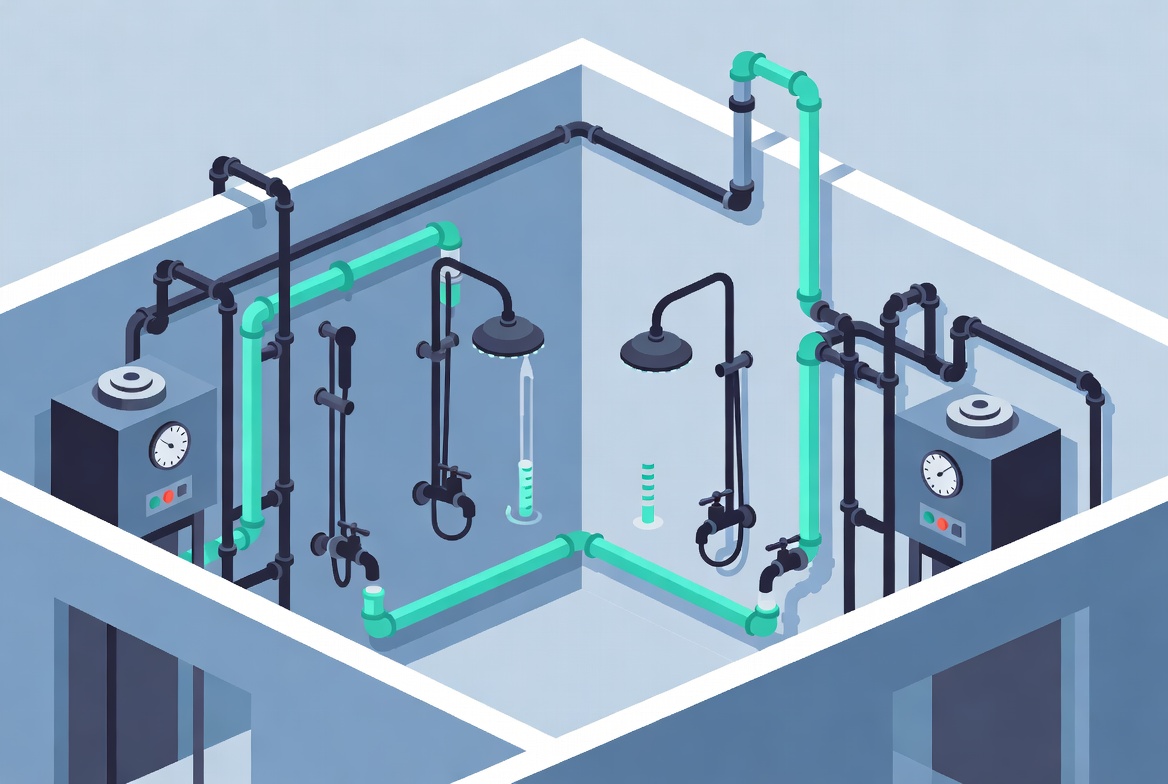
Who needs an assessment?
- Commercial Landlords & Property Managers
- HMO & Private Residential Landlords
- Schools, Universities & Nurseries
- Dental Practices & Healthcare (CQC Requirement)
- Hotels, Gyms, and Leisure Centres
- Office Blocks and Warehouses
What happens during a Legionella Risk Assessment?
A professional assessment is not just a visual check; it is a technical audit of your building's water system. Our certified assessors follow the strict guidelines of HSG274 to ensure total compliance.

1. System Condition & Asset Tracing
We trace your water system from the mains entry point to the final outlets. We inspect the condition of cold water storage tanks, calorifiers (hot water cylinders), and pipework to ensure there is no sediment, scale, or biofilm—which act as a food source for Legionella.
2. Temperature Profiling
Legionella bacteria lie dormant below 20°C and are killed above 60°C. They thrive and multiply rapidly in the "Danger Zone" between 20°C and 45°C. Our assessors take precise flow and return temperature readings across your building to ensure your water is stored and distributed safely outside of this danger zone.
3. Identification of "Dead Legs"
We look for blind ends, dead legs, and infrequently used outlets (like a guest bathroom or an isolated cleaner's sink). Stagnant water is the leading cause of bacterial proliferation.
4. The Action Plan & Schematic
You don't just receive a pass or fail. You receive a comprehensive, easy-to-read report detailing your risk score, a schematic of your water system, and a prioritized action plan detailing exactly what steps you must take to achieve full compliance.
The Safety Certificates UK Advantage
We take the headache out of statutory compliance. Here is why businesses and landlords nationwide trust our network.
Total Independence
Many companies offer suspiciously cheap assessments as a "foot in the door" to sell you thousands of pounds of unnecessary plumbing work. We are completely independent. Our priority is providing an honest, legally compliant assessment of your true risk.
Multi-Service Discounts
Why organize two separate visits? Our highly qualified, cross-trained assessors can complete your Legionella Risk Assessment and your Fire Risk Assessment during the exact same appointment, saving you money and minimizing disruption.
Standardized Quality
Whether you manage a single dental practice in Manchester or a portfolio of fifty properties across London, you receive the same high-quality, standardized reporting format from our vetted nationwide network.
Legionella Compliance FAQs
Expert answers to the most common questions regarding ACoP L8 regulations and water safety.
Yes. If you are an employer, landlord, or person in control of premises (the Duty Holder), you have a statutory obligation under the Health and Safety at Work etc Act 1974 to arrange a Legionella risk assessment. There are no exceptions for small businesses or domestic landlords.
Historically, ACoP L8 stated that risk assessments must be reviewed every two years. This strict "every 2 years" wording was removed in recent updates to encourage Duty Holders to view the assessment as a "living document."
Today, the law states your assessment must be reviewed regularly, and specifically if there are changes to the water system, a change in building use, or if key personnel (like the responsible person) leave. However, most health and safety compliance officers and local authorities still expect to see a formal review conducted at least every 2 years as standard best practice.
Yes. The law applies equally to the private rented sector. You have a legal duty to ensure your tenants are not exposed to health hazards, including Legionella from domestic hot and cold water systems. While the risk in a small domestic flat may be lower than in a large hotel, the legal requirement to assess that risk and inform your tenants of best practices (like flushing showerheads after periods of vacancy) remains the same.
The HSE clearly states that the person carrying out the assessment must be "competent." While a landlord of a very simple, single-dwelling property might perform a basic assessment themselves if they understand the regulations, commercial systems require specific technical knowledge of ACoP L8 and HSG274.
If you perform the assessment yourself and miss a critical risk that leads to an outbreak, you are personally liable. Using a certified, independent professional transfers this burden, ensuring your building is safe and your legal liability is protected.
A Risk Assessment is a legal requirement for all systems. It is an inspection of the plumbing infrastructure, temperatures, and management processes to see if the conditions are right for Legionella to grow.
Water Sampling (Testing) involves taking physical vials of water to a UKAS-accredited laboratory to see if the bacteria is currently present. Sampling is not always legally required for standard domestic systems, but it is mandatory for high-risk systems like cooling towers, spa pools, or within healthcare environments (like dental practices and hospitals).